This is the Book I’ve Been Waiting For!
Originally Published 8/9/2021

Have you ever wanted to have a deeper conversation with a teenager only to get stuck repeating the same shallow conversations about trivial topics that conclude in one-word responses? If so, this book is for you! I know I have been there before! I have been waiting for this book for a long time.
I hope this book finds its way into the hands of parents, ministry leaders, and anyone else cares about the spiritual development of teenagers and young adults! The power in this book isn't in an abstract unpacking of the 3 big questions. Those questions are no big secret and the FYI team didn't create them (the questions are: Who am I? Where do I fit? What difference can I make?). Instead, this a book about navigating conversations with young people who are unpacking and living out the impact of those three questions. As is the norm with a book from the Fuller Youth Institute, the content suggested has a foundation in a well-documented study. This is not a few smart-sounding people (which of course, they are pretty smart) putting forth some good thoughts. They have meticulously and genuinely held meaningful conversations with a diverse set of students in the course of their study. Then through their analysis, this book became a toolbox of resources benefitting those of us in the trenches doing our best to connect with students and explore important topics together.
While the abundance of questions to engage teenagers with throughout this book (and into the appendices) are the easiest take-away for most (they are great questions!!), I want share one of the ways this book impacted me the most. Fairly early on and throughout the book the authors go to great lengths to remind the readers how important true listening is to teenagers. Let's be honest, we all think we're good listeners. Though the reality is, we tend to speak way sooner than we should. This book did a fabulous job at helping me identify ways I tend to rush to speak before I've fully heard and understood the students that attempt to communicate with me. There is so much heart in this book. The authors really care about teenagers and helping those who care for students. After we can process the empathy realignment, this book provides a roadmap of 100s of questions to open new doors of conversations with the students we love.
This is another A+ from the FYI team of a book that combines academic research, a clear discussion of the problem, and an abundance of practical tools to implement.
Growing Young: Youth Minister recommended - For Ministers, Adul…Everyone!
Originally Published 9/20/2016
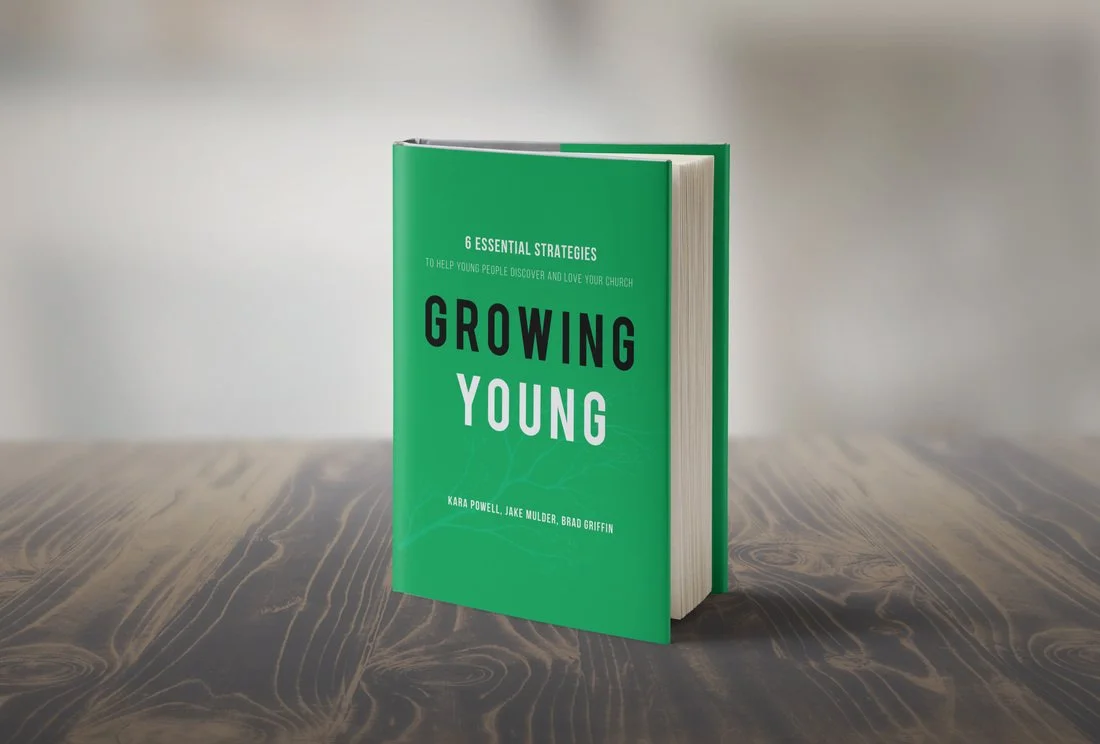
As a twenty-four year old who has lived in three different states in the past six years and been either a student or staff in church youth groups ranging from 3 to 100s, it it’s clear to me that there are plenty of churches who don’t know what to do with/about young people. That’s a problem. As a youth minister (to identify my perspective), I think everyone that cares for the future of the church needs to have access to this book. Whether you come from an urban/suburban/rural/middle-of-nowhere church, a two-week old church plant to a 300 year old congregation, and regardless of denominational affiliation (personally I’ve been part of churches of Christ and Southern Baptist churches) this book can give you some really good ideas.
To be clear, this isn’t a book about someone’s “new” ideas on how church or youth ministries should run. It’s a book based on research/interviews with dozens of churches from all over the country (in a diverse set of demographics). The authors are clear that Growing Young is NOT a how-to book. Instead they unpack Six Core Commitments that they found already in practice in churches that were doing well to grow young (engage/equip young people). Some of these core commitments aren’t anything novel (and the authors don’t pretend to make them that way). However, some of these are very difficult to put into practice and constantly require our attention. In each chapter, Growing Young gives its readers several tangible ideas on how to implement these commitments.
This book covers the highlights from several other prominent ministry ideas/books/philosophies. In some ways, the Fuller Youth Institute team made this book to be a one-stop shop kind of project. It blends so much good information into one manageable/accessible package that is almost too good (my head hurt while reading sometimes because of how bright the inside of my skull became when so many lightbulbs lit up). It gives leaders from all backgrounds some very important tools for helping the church (intergenerational ministry, empowering students through their gifts, leadership styles, service/justice issues, importance of adult involvement in the lives of teenagers, ministering to families, etc).
Growing Young is balanced. At times it provides facts, information, and other metrics. In the same chapter it provides stories/testimonies that coincide with those pieces of data. Then soon after that you get a gentle, but firm reminder that it is important that our churches get it together and implement their findings if we want to be part of the bigger story of God’s work in His kingdom.
The authors are deeply passionate about the subject. They present their material in a humble, inspiring manner. This book is written by those who care deeply for God’s kingdom for those who care deeply about God’s kingdom. I don’t see any serious negative qualities in this book other than it sometimes was painful to read (man can only take so many “rip, stab, stabs” to heart upon realizing his/his church’s mistakes in the past). It’s not going to be the final word on ministry ever written, nor was it intended to be. Growing Young is passionate, informative, and most importantly (to me at least) helpful.
learn more about this book at http://churchesgrowingyoung.com/
Motive Matters
Originally Published 7/2/2015
When do you check your motives? How often do you ask yourself “why?”
Currently, I find myself surrounded by lots of new. I’m in a new state, in a new home. I have a new church family and a new job. There are lots of new headaches I have to face (changing cell phone carriers and potty-training a new puppy are among them), but I also have an opportunity to form new habits.
As a new youth minister I’m in a transition period referred to as the honeymoon phase. According to youth ministry research this is a time when I should expect high “approval ratings” and plenty of support. At this phase, It’s super important for me to form habits that bring glory to God and not myself.
Over the past few weeks I’ve been tempted to say and do things that pull attention or praise to myself. While it seems hard to not be in the “limelight” while being a minister, I need to make every effort to question my motives along the way. I have to ask “WHY?” repeatedly.
Why do I want to build this relationship?
Is it to gain power and prestige or do I value people, intimacy, and sharing life with one another?
Why do I want to teach on this topic?
Does it show off my knowledge, preparation, or expertise or do I believe that it is a relevant message from God?
Why do I want to have this event?
Am I concerned with being liked or am I focused on doing what is necessary (which often times can be fun, too)?
Why do I word things the way that I do?
Am I trying to impress others with my speech or am I trying to be a clear communicator?
Why am I serving in youth ministry?
Is my service for myself or is it for God?
Those are some of the questions that I have to ask myself. What questions do ask yourself? It is urgently important for us to question our motives. We must ask ourselves why and we must do this often.
John the Baptist understood his mission and purpose quite well. When John’s disciples came to him asking what needed to be done when the crowds of people began to flock to Jesus and his disciples, John responded perfectly:
27 John answered, “A person cannot receive even one thing unless it is given him from heaven. 28 You yourselves bear me witness, that I said, ‘I am not the Christ, but I have been sent before him.’ 29 The one who has the bride is the bridegroom. The friend of the bridegroom, who stands and hears him, rejoices greatly at the bridegroom’s voice. Therefore this joy of mine is now complete. 30 He must increase, but I must decrease.” John 3:27-30
Motive does matter. Are you taking the time to ask yourself “why”?
Keeping the “Longview” in ministry
Originally Published 5/22/2015
These past few days have been a blur. I graduated college two weeks ago, Had a wedding anniversary this week, packing up to move in a week, and getting everything done in between.
Aside from the busy with those things, it actually has been a very refreshing time. For the first time in five years, I've had very few responsibilities. All my campus work (as a student and a worker) has been finished and I've been able to focus on my home and my ministry at Bethel Grove. It's also been a time for me to prepare for ministry in Naples.
This has been a sort of sabbatical time for me. Because of the fast pace of youth ministry, it might the only one I get for many years. During these past few weeks I've spent a lot of time praying, studying, reflecting on my life and my time in preparation for ministry, and reading resources to help me in the future. One lesson that has keeps coming up in my conversations or reading is the importance of the longview.
The longview is recognizing that God is at work throughout a long period of time, not just in the short term. Often, especially in youth ministry, we expect very quick and clear results of our efforts. That's not how it works. Sometimes there are immediate results, but they don't always last. However, the lesson of the longview teaches that our job is to be diligent workers, because God is ultimately the one responsible. We are the planters and waterers, but God, and only God, brings the growth (1 Cor 3:6-7 emphasizing God only).
This is incredibly freeing! As a very anxious person, I needed this time to be reminded of that. I'm a fixer. When I see a problem I want to fix it. I'm learning that my job is not to fix it. It's to love God, love students, love their parents, and to do what I can to make situations better while being faithful to His word. As I transition away from a church I've been working with for two years, I'm somewhat frustrated because I feel the work is incomplete.
I've learning that people come and go, but God always remains. This is why we must keep the longview in focus. God is responsible for growth, we just work diligently attending to the field. If I put the pressure on myself to bring results, I'm setting myself up for failure.
___________
These are not original concepts to me, but acknowledgements are due to several people.
Conversations with my wife, Jessica Grace, Professor Devin Swindle, and Dr. Dan Stockstill have all said similar things to me recently. I'm sure many more.
Plus, I've been reading:
In Transit: A Youth Worker's Guide to Navigating a New Beginning by Tim Ciccone
A Beautiful Mess: What's Right With Youth Ministry by Mark Oestreicher
Ministry Decision…Heading to Texas
Originally Published 4/23/2015
Jessica and I are humbled and honored to announce that we will be moving to Naples, TX near the beginning of June, where I will begin working as the Youth Minister at the Naples Church of Christ.
We are excited about this next stage of life. Looking back, we are blown away by how God has been at work in preparing us for where we are today and where will be in a few weeks.
As many of you know, this ministry search process was incredibly rewarding, but also very exhausting. We've gotten to meet and talk with many churches and church leaderships from all over the country the past several months. The extended family of God that we've gotten to see and visit with is beautiful. To those of you we've met in this process: thank you guys so much for letting us get to know you! We're continuing to pray for your churches and ministries.
To the Searcy community: You guys been great. We're so thankful Searcy has been our home these past five years. I'm very thankful for the past two years I've had at Bethel Grove church of Christ where I've been learning and growing in ministry (and hopefully doing some teaching, too). Jessica has been blown away by the support and encouragement she's received working at Liberty Christian School this past year. Of course, our time at Harding has been such a blessing to our lives and development. We can't wait to visit campus down the road, rumor has it the "mother-ship" will beckon us home.
To our friends: Thank you all so much for your support and prayers these past few months. As I've said, we're thrilled to make this announcement and we are in awe of the journey we have been on with God. Please continue to pray for us as we finish our school year (Jessica teaching, me as a student) and begin our transition to Naples!
Note: This was originally posted on my personal facebook profile.
Senior Portfolio Presentation
Originally Published 4/10/2015



Today is a significant milestone in my college education. It is my senior mass communication portfolio presentation. Today I’ll spend 15 minutes talking about how my time as an electronic media production major has prepared me for life after graduation.
Over these past few years at Harding, it's been interesting to watch people's reactions when I tell them I've been a Bible/ministry student as well as an "electronic media production" major. After clarifying what the major includes I often get questions or statements like these:
"Oh, so you're going to create the next Veggietales?"
"So do you want to be a televangelist?"
"Wow, those have nothing in common with each other."
"Wow, those go great together."
To clarify, I don't think I'm going to ushering in the next age of "Larry the Cucumber," nor is my calling to digital/televised mega-churchdom. I simply wanted to pursue developing a tool that I was already interested in and somewhat skilled in to better equip me for ministry.
Since my goal has always been to serve in ministry, the communication department faculty has been (graciously) helping me hone in media and communication skills that are especially helpful either in ministry or freelance work to complement my ministry.
Through my coursework I have studied:
Video Production
Photography
Web Design
Public Relations
Audio Production and Recording
Typography & Graphic Design
Screenwriting/Story Development
Legal and Ethical Issues within mass communication
Even though I've received some very helpful technical instruction, it’s been the broader lessons about communication that have been the most beneficial. Every communication teacher I've had presented some nugget of wisdom that sometimes took a (at times frustrating) project to understand. At times I was learning the difference between an analog and digital audio system, or memorizing the mechanics of a digital single lens reflex camera, or hearing that a good movie usually includes seven main "beats". However there were plenty of other instances where I learned that "a good audio engineer is one that goes unnoticed in a production" (David Robison), that "the best camera is the one you have with you" (Jeff Montgomery), or that in film you should almost always show instead of tell (Joe Aaron, Mark Prior, Grant Dillion).
However, let's explore the even broader lessons. As the advertisement poster for my presentation reads, I am “equipped to use design, story, and creativity in ministry.” As I've been preparing for this presentation I made a realization about communication. It is actually quite closely connected to my other course of study. Just as the communication field values "design, story, and creativity," so does God. This is because design, story, and creativity are traits of God.
Here is a summary of what I've learned/observed in both God's actions and in the mass communication field:
Design is purposefully bringing order to chaos.
Story is the transcendent language of humanity.
Creativity (or creation) is problem solving that brings enjoyment and meaning.
Essentially, Christian mass communicators serve in a field where they are given glimpses into the character and nature of God. Daily, communicators get to explore traits of God that he has shared with humanity.
After studying these principles, how can I not apply them to ministry?
Concerning Death
Originally Published 3/31/2015
Since college, I've personally known at least eight people who have died. That includes an aunt, an uncle, a preacher, a spiritual mentor, a professor, a club brother and friend, and two guys my age from my hometown (didn't know either well, but knew them since I was quite young).
Because some of these experiences are still very fresh, I’m not fully able to process what I've learned through those losses, but I wanted to try and articulate what I could.
First, the loss of life is tragic. I don’t know a strong enough word to express this (well I do, but try not to use them). Death reminds us of the reality of humanity’s brokenness and sinfulness. The experience of losing those influential or close to you is a painful moment of being exposed to what it must be like for God to watch us chose wickedness instead of righteousness. As much as there is beauty, friendships, and relationships in this world, brokenness remains. The separation we feel from our departed loved ones breaks our hearts. Yet, it’s at these times of separation that we better understand the human condition and get a glimpse into the character of God. Our sin separates us from God; essentially, in sin, we are dead to God. I have no doubt God grieves over those who are separated from him.
I’m so incredibly thankful, that the end of this story doesn't end in grief. God loved his creation so much that made a way for mankind to be brought back to life. Through Christ’s atoning work, we who were dead in our sins, can now be alive again. This reunification with God is miraculous and full of joy. Further, the work of Christ gives us a hope to fight for. For those who are in Christ, we have the hope of resurrection and reunification with God and with those we've lost (emphasis on “those in Christ”). Our Christian friends and family members who have already died, are simply further along in God’s work of restoring his creation.
Second, I’ve tried to learn from the example of those whom I’ve lost. a few weeks ago, I lost a friend, club brother, fellow photographer, and young minister (I almost wrote “aspiring minister,” but Nick was involved in more genuine ministry than most consider). Nick Smith was an awesome guy, and even though we didn’t know each other super well, I learned a great deal from him. He was a night owl, while I’m wide awake in the morning. We had a class together in the morning last semester and I used to always tease him, annoy him, and try to get him to snap at me. He never did! Despite my constant sarcasm and annoyance, he just smiled and laughed with me. So, from Nick I’ve learned a humility and love for others that truly puts others before yourself. From many of the other, not so recent, losses I could share stories about how I’ve become a stronger person from his or her influence on me.
Third, I’ve been reminded of hope. Hope of the resurrection, hope of a fabulous reunion of the saints joined together in worship of the King. Even though death is always tragic, there is still hope. Personally, I don’t think about hope enough. Recently, a friend reminded me, in an unrelated context, that without hope we have nothing.
Fourth, as many have said surrounding Nick’s death, the body of Christ formed together and supported each other. Tragedy proves community. In all of this, I’ve realized how important my friends and family are to me and how short life can be. Seeing Christians embrace each other, cry with each other, praise together, and recover together is a powerful experience.
Again, those are my thoughts for now, how do you process loss?
(Un)Official Youth Minister Appreciation Day
Originally Published 3/3/2015
I am at the pinnacle of my college career. I'm staring down the start of the next stage of life, it's a mountain top-type experience, and I have an amazing view.
Looking behind me it is clear that I would not have gotten where I am now if not for several groups of people. During the past few years I've been studying youth ministry and learning what all goes on in a youth ministry "behind the scenes." Because of that, recently I've spent some time being incredibly thankful for the youth ministers I had as a teenager.
To all youth ministers out there: Thank you! While this "thanks" does go to youth ministers everywhere (everyone needs to be appreciated, right?), I want to specifically thank the (mostly youth) ministers from my adolescent development. So Thank you:
John Steen
Jeff Lovingood
Travis Kaiser
Jason Underhill (I know you were a Children's pastor when I worked with you, but I was still mentored from you!)
Michael Jenkins
Shane Sisk
Tyler Hirth (not a YM, but equally a spiritual mentor)
Jeremy Johnson
Beth Peterson
Jon Micah Richardson
David Ray
David West
Some of you I've known a very long time, others just for short stretches. However, each of you have been part of my spiritual development in more ways than I can even recognize.
Many of you patiently listened to me when I complained about my perceived problems (many of which weren't really problems).
You answered my (sometimes ridiculous) questions.
You showed me a love for God's word that became contagious.
You believed in me and developed me as a leader.
You disciplined me when I was having a stupid moment.
You showed me my gifts and helped me develop them for use in ministry.
You recognized that you couldn't do everything and introduced me to tons of other loving adults who helped shape me (I could, and might, write multiple posts on the volunteers and interns that have shaped me).
Most importantly, you were there.
There were times when I thought you were the best thing since sliced bread, there were times I was angry with you and didn't understand what you were doing (Making you stale, sliced bread), and there were many times when I quietly watched your behavior to learn from your Godly lifestyle.
I would not be the man I am now if it was not for you all. Please do not give up. Keep going, keep serving. You ARE making a difference. Keep doing those things that are best for your students, even if it's difficult. Continue to value every student you interact with. Continue to lead students into God's word to point them to the cross of Christ. When I grow up (I still have two months until graduation), I want to be just like you!
I know that none of you were or are seeking to be thanked, but please know that I am grateful and your reward will be in heaven.
I'm not sure who will read this. Whether you are a parent, a student, a minister, part of a church's leadership, a professor, or someone who accidentally found my site, I encourage you to reflect on those who have shaped you and to be thankful to God for them. As I'm learning, ministry is difficult and those who serve the kingdom could use some encouragement (just don't let it get to our heads).
Like I said, the list above is not exhaustive. There are tons of other ministers, interns, small group leaders, teachers, family members etc. who have shaped me in incredible ways. Thanks to you, too!
Today, to whom are you going to be grateful?
______________________
By the way, apparently October is "Clergy Appreciation Month," and a particular weekend is dedicated to youth ministers, but why can't every day be minister's appreciation day?
Ministry Job Hunting Is Like Dating
Originally Published 2/26/2015
I am in the middle of looking for a ministry job and in the process I'm trying to learn as much as I can. One observation my wife, myself, and my friends have made is that the process of searching for a ministry position is a lot like dating.
Let me explain. In both minister/ministry searches and in dating relationships we use language like "I found someone online," "When can I see you again?," "Wait, we just met and want me to meet your elders?" (bad joke). Seriously though, there are plenty of parallels. Sometimes when a ministry candidate like myself starts a conversation it might be a little awkward at first, but as the relationship with the contact people develops, there's a good thing being built. WIth others, you might feel that your first date was great and already you feel connected to the church/candidate. Like most of ministry, building these initial connections are all about the relationships.
Also, There are DTR ("Define the Relationship") moments when a church and individual need to express how interested they are in each other. Additionally, I've noticed that I bring my somewhat bad dating habits into the ministry search world. If you ask any of my previous girlfriends, you might learn that I was clingy, protective and at times jealous. (I'm very thankful that my wife, Jessica, is equally those things so we understand each other, haha). So even in the process of talking with churches I've caught myself getting jealous or protective of a position or against a candidate (as if I had some claim to it---ridiculous). At the same time, all of my ministry mentors have expressed the importance of exploring as many opportunities as make themselves available so I'm diligent in finding the best fit. However, I like the idea of being exclusive, so I've felt somewhat guilty for talking with multiple churches at the same time. Is that bad?
Last, just like in dating relationships, there is a natural progression that leads to one of two possible outcomes: there's either a breakup or the relationship goes to the next level of commitment (marriage with this metaphor). Here's a helpful reminder, no one likes break ups. I'll try to do my best in closing doors gently, and I'm grateful that so far my experience with churches has also been gentle. Really this is a dangerous business. There are so many emotional and attachment issues at play here for both the candidate the church. Consider a church visit. It's a test-drive, a date where both parties see if they have found a mutual fit. As a candidate, you put yourself in the position where you start to ask questions like "can I envision my family living/starting here?" or you think things like "I really like these people they care a lot about me". However, it's all uncertain. Even a good visit, may end in a closed door. There's so much vulnerability here on all sides. All of us need to be aware of that!
This metaphor could be extensively. Once a commitment between a church and a minister is made does the relationship become analogous with marriage? If so, what are those implications?
What are your thoughts here? How is a ministry job search similar to dating?